
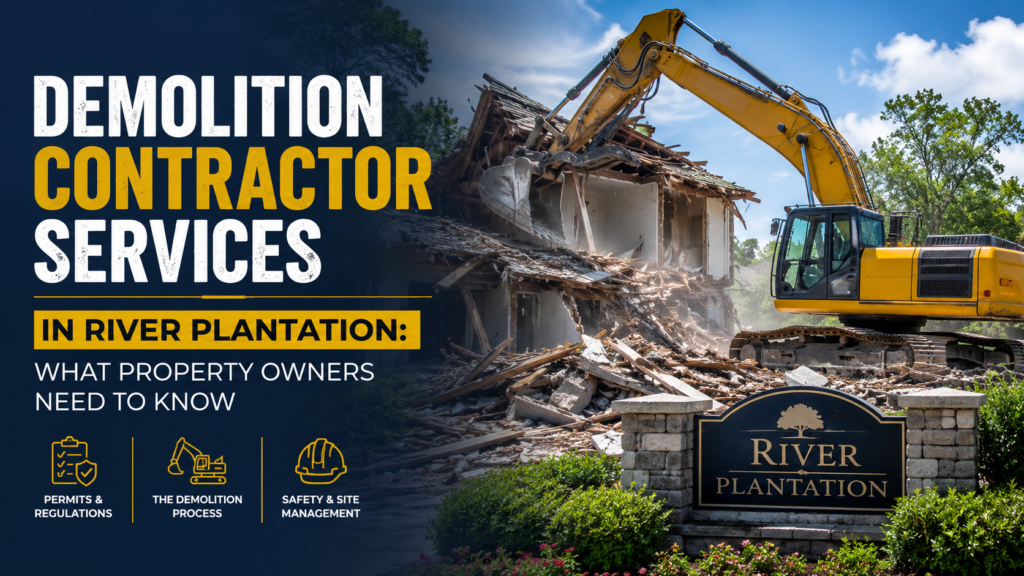
River Plantation is a residential community in Montgomery County, Texas, located near Conroe along the West Fork of the San Jacinto River. A planned community established to provide residential amenities and natural surroundings north of Houston, River Plantation features a variety of home styles across a community that has evolved over several decades of development. The proximity to the San Jacinto River a defining geographic feature of the community shapes both the natural character of the neighborhood and some of the specific regulatory and practical considerations that Demolition Contractor River Plantation services in this area must address.
Demolition and the River Proximity Factor
River Plantation’s location along the West Fork of the San Jacinto River means that some properties in the community are within or near the FEMA-designated Special Flood Hazard Area (100-year floodplain). This geographic reality is significant for demolition projects for several reasons. Properties in the floodplain may have experienced flood damage that necessitates demolition the aftermath of major flooding events like Hurricane Harvey (2017), which devastated many communities along the San Jacinto River system, created substantial demolition demand in communities throughout this area of Montgomery County.
Demolition within or near a floodplain also requires attention to regulatory requirements related to water quality and sediment control. TCEQ construction general permit requirements apply to sites disturbing one or more acres, and sites closer to the river require particular attention to erosion control to prevent demolition debris or disturbed soil from reaching the waterway.
Post-Flood Demolition: A Specific Context
Communities along Texas river systems like the San Jacinto have seen significant demolition activity following major flood events. When homes sustain substantial structural damage from flooding defined under FEMA’s substantial damage rule as damage exceeding 50 percent of the pre-flood market value they must be brought into compliance with current floodplain regulations before repair or reconstruction. In many cases, this means elevation of the structure on new foundations, or demolition and replacement with a new structure built to current freeboard requirements.
Demolition of flood-damaged structures in communities like River Plantation follows the same pre-demolition requirements as other residential demolition but may involve additional complexity:
- Flood-contaminated materials: Structures that have sustained prolonged water inundation may contain mold-infested materials that require handling consistent with EPA and Texas DSHS guidelines for mold remediation.
- Structural instability: Flood-damaged structures may have compromised structural integrity, requiring careful demolition sequencing to avoid uncontrolled collapse.
- FEMA buyout coordination: For properties in repeated flood loss programs, demolition may be coordinated with FEMA’s Hazard Mitigation Grant Program, which provides funding for voluntary acquisition and demolition of flood-prone properties.
Standard Residential Demolition Services in River Plantation
Beyond flood-related demolition, River Plantation experiences the same cycle of renovation-driven demolition activity common to established communities of its age. Projects include:
- Full and partial structural teardowns for residential replacement projects.
- Interior selective demolition for kitchen, bathroom, and whole-home renovations.
- Accessory structure removal detached garages, storage buildings, old decks and patios.
- Pool demolition: Older in-ground pools that are no longer wanted or maintained are filled, broken down, and the area repurposed as landscaped yard.
Montgomery County Regulatory Framework
River Plantation sits in unincorporated Montgomery County. Demolition permit requirements are less stringent than in incorporated cities, but state-level requirements TCEQ asbestos regulations, utility disconnection requirements, floodplain development regulations all apply. Homeowners in River Plantation who are within the floodplain should confirm any applicable FEMA or Montgomery County floodplain permitting requirements before beginning demolition and subsequent reconstruction work.
Conclusion
Demolition contractor services in River Plantation address the needs of a riverside residential community whose natural setting adds both beauty and specific regulatory considerations to demolition projects. Whether the project arises from flood damage, renovation planning, or simply the need to replace aging structures, property owners in River Plantation benefit from working with demolition contractors experienced in the Montgomery County regulatory environment and sensitive to the river proximity factors that make this community’s demolition context unique.