Solar Company in Islamabad: Real Project Case Studies for 2026
Choosing a solar company in Islamabad is easier when you stop reading brochures and start studying finished projects. A completed installation tells you more than any sales pitch: how the system was sized, how it performs through load-shedding, and whether it still delivers years later. This 2026 article walks through the kinds of real-world projects a serious installer takes on, from compact residential rooftops to commercial arrays, and shows what you should look for when you judge a company by its work.
Islamabad’s climate is genuinely good for solar. Clear skies for much of the year and strong irradiance mean a well-built system pays back quickly. But results depend on execution, and execution is best measured by the track record of completed jobs.
Why Case Studies Matter More Than Promises
Any company can claim expertise. Only a portfolio proves it. When you review real projects, you can see whether the installer handles shading intelligently, sizes storage sensibly, and delivers the generation numbers promised at the quote stage. A reputable solar company in Islamabad should be happy to show completed work and let you speak to past clients.
Case studies also reveal how a company handles the messy realities of Pakistani rooftops: water tanks that cast afternoon shadows, older wiring that needs upgrading, and load profiles dominated by summer air conditioning. Those details never appear in a glossy ad.
Case Study 1: A Residential Rooftop in Bahria Town
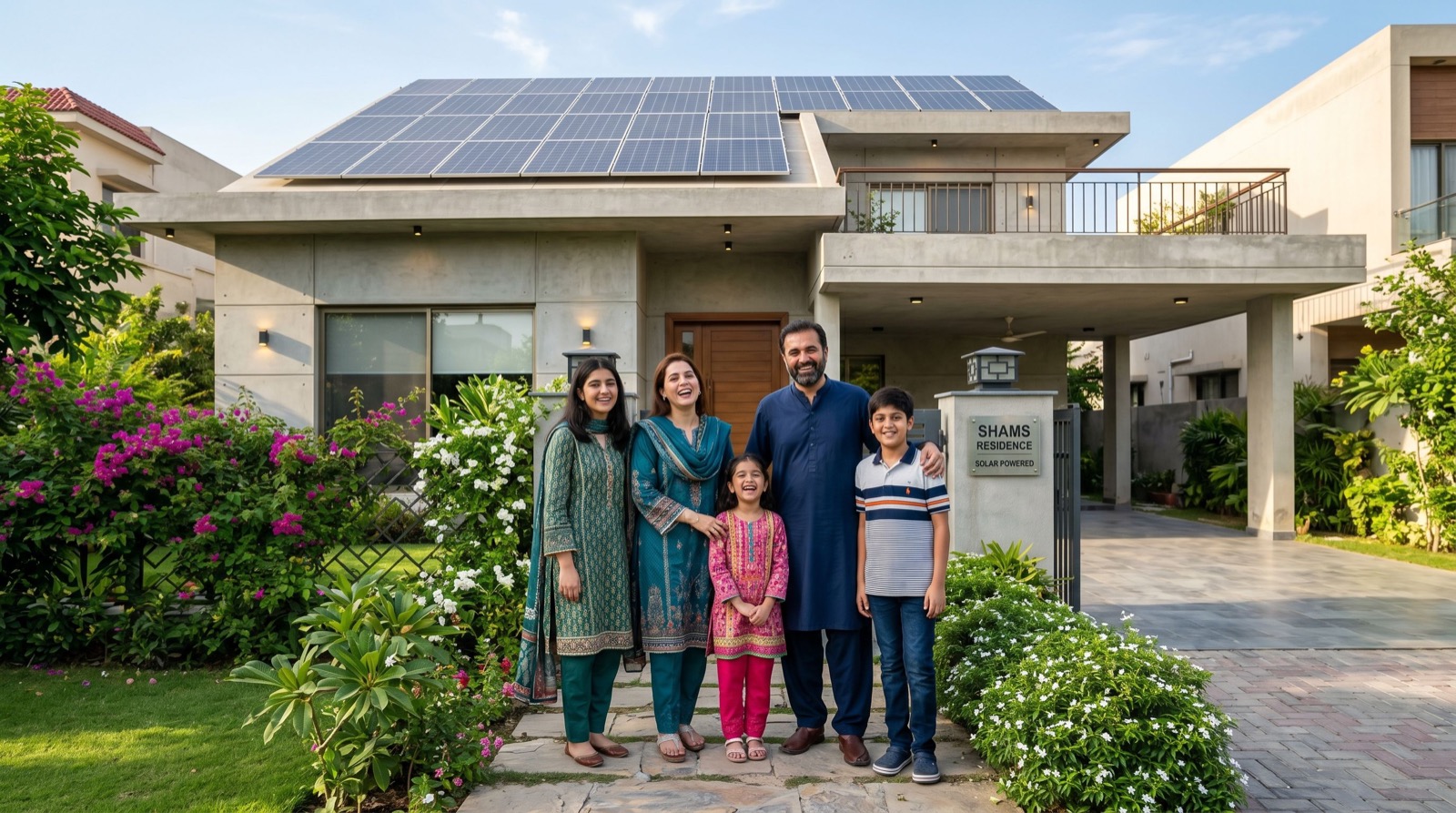
Consider a typical 10 marla home running two air conditioners, a refrigerator, fans, and lighting. The family wanted daytime savings plus backup through the daily outage. The solution was an 8 kW array paired with a hybrid inverter and a lithium battery bank sized for evening essentials.
- Challenge: A rooftop water tank shaded part of the roof each afternoon.
- Solution: Panels split across two strings on separate MPPTs to isolate the shaded section.
- Result: Roughly 70% reduction in grid import and uninterrupted backup during load-shedding.
The lesson is that thoughtful string design recovered energy a careless layout would have lost. That is the value a skilled team adds beyond simply bolting panels down.
Case Study 2: A Small Commercial Unit in the Blue Area
A small office wanted to cut its daytime electricity bill and improve its sustainability profile. Because commercial loads peak during sunlight hours, a grid-tied array with modest storage made the most sense.
| Parameter | Before Solar | After Solar |
|---|---|---|
| Monthly grid units | 3,200 kWh | 1,150 kWh |
| Daytime backup | Diesel generator | Solar + battery |
| Estimated payback | — | 3.5 years |
| Diesel dependence | High | Minimal |
The office replaced most of its expensive daytime consumption with self-generated power and cut its reliance on a noisy, costly diesel generator. Documented outcomes like these are exactly what you should ask any installer to provide.
What Should You Look for in a Project Portfolio?
When you browse an installer’s completed work, look past the pretty photos and ask sharper questions. Does each project list system size, equipment brands, and measured performance? Are there local references you can call? Does the company show variety, from homes to commercial sites?
Browsing a company’s documented solar projects in Pakistan gives you a realistic sense of what to expect on your own roof. Pair that with independent reviews, and you build genuine confidence rather than relying on marketing claims.
Questions to Ask About Any Project
- What was the client’s goal, and did the system meet it?
- How was shading and roof orientation handled?
- What equipment was used, and is it still supported?
- What generation figures has the system actually delivered?
- Can the past client confirm after-sales support was good?
Islamabad’s Solar Potential in Context
The capital sits in a region with strong solar resource, and national efforts to expand renewable energy continue to accelerate. Pakistan’s official energy planning highlights solar as a central pillar of future capacity, and the strategic context published by the Alternative Energy Development Board underlines how quickly rooftop adoption is growing. For homeowners and businesses, that momentum means better equipment availability, more competition, and stronger incentives to go solar in 2026.
The practical takeaway is simple: the market is maturing, so hold your installer to a higher standard. Demand documented projects, clear performance data, and real accountability.
Turning Case Studies Into Your Own Success
Reading about other people’s projects is useful only if you apply the lessons to your own home or business. Start by defining your goal clearly: is it bill savings, backup power, or both? Then match the case study most like your situation and use it as a benchmark for the quotes you receive.
Working with trusted professionals who can point to completed jobs similar to yours removes most of the guesswork. You are no longer betting on a promise; you are following a proven path.
Red Flags in a Weak Portfolio
- Stock photos instead of the company’s own installations.
- No system sizes, equipment details, or performance figures.
- Reluctance to provide references you can contact.
- Only tiny jobs shown when you need something larger, or vice versa.
Frequently Asked Questions
Why should I judge a solar company by its projects?
Completed projects show real performance, problem-solving on tricky roofs, and after-sales support. They are far more reliable than marketing claims because you can verify them with past clients.
How much can a home in Islamabad save with solar?
Savings depend on system size and consumption, but well-designed residential systems commonly cut grid import by 60–75%, with payback periods of a few years given current tariffs.
Do commercial and residential projects differ much?
Yes. Commercial loads usually peak in daylight, favouring grid-tied designs with modest storage, while homes often prioritise evening backup, favouring larger battery banks. A good company tailors each design.
Can I visit a completed installation before deciding?
Reputable installers will arrange for you to see finished work or speak with past clients. If a company refuses, treat that as a warning sign.
Choosing the Right Solar Company in Islamabad
The best way to pick a solar company in Islamabad is to let its finished work do the talking. Study real case studies, verify performance figures, confirm the equipment is genuine and supported, and speak to past clients before you commit. Match your goals to a proven project, and you dramatically reduce your risk.
Ready to take the next step? Review an installer’s project portfolio, request references, and book a site visit so your home or business can join the growing list of successful solar installations in the capital. The evidence is on the rooftops already; make sure yours is next.